6 Best AI Video Editing Tools You Should Try
It's hard to deny that promotion for AI video-editing tools is everywhere right now. Claims of "automatic editing" and "end-to-end composition" keep popping up. But the reality is many AI video-editing tools are more hype than truly useful.
If you're not totally against AI, take a look at the list of AI video-editing tools we put together. See if any of them help with your video editing and content creation.
In this article, you will learn:
Should You Use AI to Help Edit Your Videos?
Before we start sharing AI video-editing tools, let's ask one question: Should you use AI to assist your video editing and content creation?
Some people on TikTok use ChatGPT to help with color grading. It looks cool. But in practice, it isn't as efficient as applying a simple LUT.
For professional video editors and creators, the real question shouldn't be whether AI will take away a creator's personality. It should be whether AI can actually save them time and improve their workflow right now.
To be honest, editors' and creators' work is very creative, but it's also full of repetitive, time-consuming tasks (like doing the same white balance adjustments over and over). If AI can handle those boring steps, you'll have more energy to focus on the meaning of the images, the story, and the larger context.
Our view is that the AI-driven change in content creation will not weaken the importance of creative vision. If anything, it will make creative vision even more important. You must really understand your craft—technically, creatively, and theoretically. Be clear about the look you want to present and the reasons behind it.
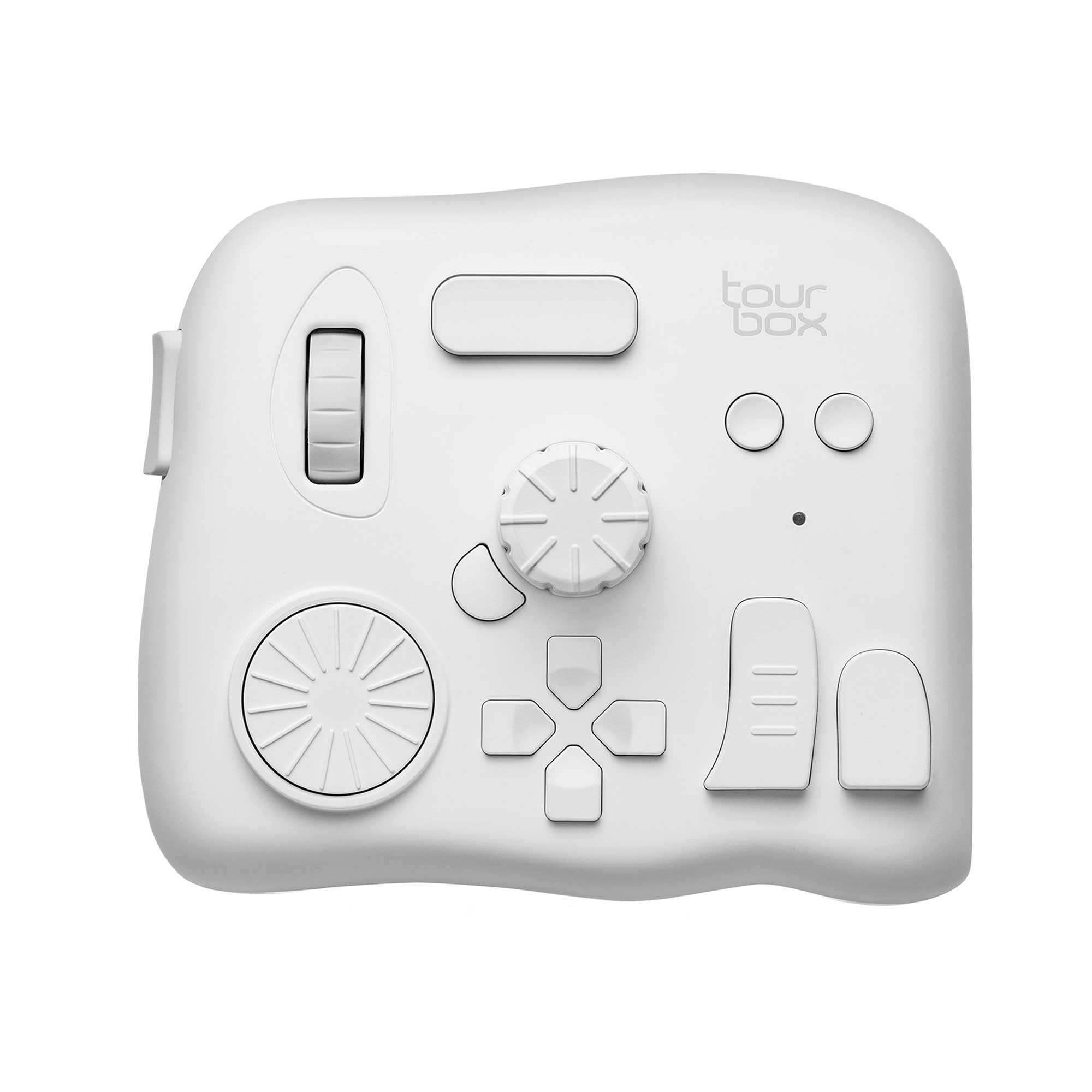
Quick ad. If you also value efficiency in video editing and content creation, you might want to check out our TourBox controller.
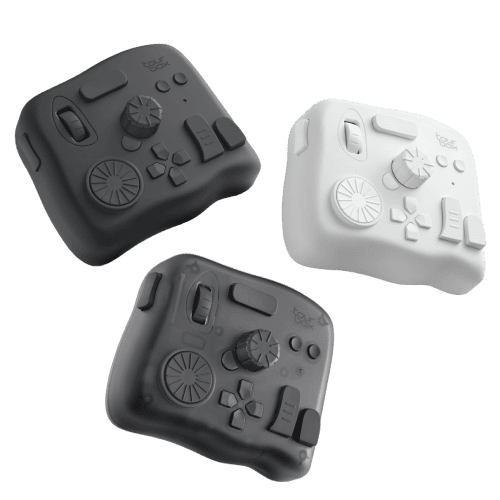
You can map the functions and keyboard shortcuts of your favorite editing apps to TourBox's physical buttons and knobs. Like using a game controller, it simplifies the mouse-and-keyboard steps and lets you edit and color video more efficiently.
TourBox also has many built-in functions and default presets, so you can start using it right away with little to no learning curve. If you're interested in how TourBox can speed up your editing, click our Video Editing page to learn more.
6 Best AI Video Editing Tools You Should Try
Right now, many AI video tools are still in the "hype" stage. But some tools are starting to solve real post-production problems. They speed up tedious workflows, improve image quality, and free up creative energy.
Below are six AI video-editing tools we tried and think are worth recommending.
1. Adobe Premiere Pro & After Effects
Adobe has quietly woven AI into its video tools. Rather than chase flashy features, Adobe focuses on optimizing the most time-consuming steps. Their open attitude about how AI is used is also worth noting.
In Premiere Pro, Adobe has released tools like Generative Extend (for small clip extensions, frame fills, and ambient audio), Speech-to-Text (transcription and automatic captions), Auto-Reframe (automatic aspect-ratio adjustment and reframing), and semantic/visual search and scene detection. These features can save a lot of editing time on social-media and corporate video projects.
But these AI-generation features often come with limits: resolution, clip length, and whether they require Firefly or cloud quotas.
In After Effects, AI-driven tools like Roto Brush 2, Refine Matte, and Content-Aware Fill greatly cut down on masking and object-removal work. For many relatively simple shots, tasks that once took hours can now take minutes or less. For motion-graphics and compositing pros, this is a huge efficiency boost.
Overall, Adobe's AI strategy is to improve existing workflows without disrupting pro users' habits. It's a good choice for people who want efficiency improvements.
2. DaVinci Resolve
DaVinci Resolve has long been a leader in color grading. It first added the Neural Engine in DaVinci Resolve 16 (2019). Later versions kept expanding and improving its features. In Resolve 19 (2024), more Neural Engine–based AI tools were added.
The Neural Engine powers features like face recognition, smart tracking, reconstruction, and Speed Warp. These tools are built into both the editing and color workflows. Speed Warp uses optical flow plus machine learning to estimate motion. In many cases, it gives smoother slow motion than simple frame blending or basic optical-flow methods.
Likewise, object removal used to require heavy frame-by-frame masking. Now, Neural Engine–driven tools speed up that work and often give satisfying results in normal scenes.
For editors working on documentaries, dramas, or commercials, Resolve offers a good compromise between automation and manual control. Common repetitive tasks can be handed to the Neural Engine to save time. Shots that need tight control can still be refined with the node-based, manual workflow.
It's worth noting that DaVinci Resolve Studio (which includes most advanced AI features) uses a one-time purchase license, not a subscription. The free version handles many basic tasks, but to use the full set of AI and high-end effects, you usually need the Studio license.
From another angle, Resolve's AI tools don't require extra plugins or subscriptions. You buy the Studio license and use the features right away. That buy-once model makes it very cost-effective and attractive for professional users.
Especially in the 2025 DaVinci Resolve 20 update, the Studio version added many powerful new AI features. You can watch MrAlexTech's YouTube video to learn about these new features, how they work, and whether they are worth your time.
3. Eddie AI
Eddie AI's arrival was a breath of fresh air. It is an AI video-editing tool made by a small team, but it works very well. It shows that practical AI tools are not only made by big companies like Adobe and Blackmagic.
This product officially launched in early 2025. It calls itself "the ChatGPT of video editing," and the experience largely matches that claim. It performs especially well in the rough-cut stage for multi-camera interviews. For everyday projects, it is very handy for doing first cuts of long interviews.
Eddie AI works through a prompt-driven interface (the UI is very similar to ChatGPT). It quickly analyzes footage and generates smart edits, producing a draft in seconds. Below are the ways it helps pro editors and content creators most:
- Quick rough-cut generation: Upload A-roll and B-roll, then type prompts like "a more engaging opening" or "60-second highlight." The tool can create a draft edit that is almost ready to use.
- Multi-cam smart organization: It automatically detects and syncs multiple camera clips, then organizes them onto tracks for easy selection.
- Seamless export to major NLEs: After the rough cut is ready, you can export the timeline to Premiere, DaVinci Resolve, or Final Cut Pro with one click to continue fine-tuning.
- Fast iterative edits: Using the chat-like interface, enter simple commands (for example, "make it 60 seconds" or "remove stutters") and get an updated version in seconds.
For editing interviews, meeting recaps, or speech clips, Eddie AI saves a lot of time spent replaying footage and hunting for clips. It cannot replace deep narrative editing, but in the rough-cut stage it is fast and accurate. It greatly improves efficiency and lets creators spend more energy on pacing, style, and story structure.
4. Descript
If you often edit interviews, podcasts, tutorials, or other voice-first content, Descript may become your new favorite. Its most notable feature is that you can edit video by editing the transcript.
This is not new—many tools do something similar. But Descript is a full AI video-editing platform built for this workflow. It automatically transcribes your footage. Then you just cut, move, or delete words like editing a Word document, and the matching video clips update.
It also includes an AI voice-cloning tool called "Overdub." It can mimic the original speaker's voice to replace missing or flawed audio. It's great for small fixes without re-recording whole lines.
Editors used to dragging and trimming clips may find this method odd at first. But when you cut a 30-minute interview into a 5-minute finished piece in half the time, you'll see why it's so powerful.
Of course, Descript is not suited for complex timelines or film-level narrative work. But for short videos, online lessons, or content marketing, it's one of the most time-saving tools on the market.
5. Topaz Video AI
In the past, only high-end post houses had powerful image-restoration tools. Topaz Video AI brings those tools to a much wider group of users. It makes rescuing poor-quality footage something anyone can do.
It includes a full set of deep-learning image-enhancement features: frame interpolation, denoising, upscaling, and deblurring. The models were trained on thousands of real video samples. Whether you need to recover low-light footage, upscale 1080p to 4K, or restore old archival clips, Topaz's results are striking. Almost every editor who has used it gives it high marks.
The most impressive feature is slow-motion frame interpolation. It auto-generates in-between frames so motion looks smooth and natural, with almost no artifacts. This is extremely useful when the original footage wasn't shot at high frame rates, but you want smooth motion in post.
It's not a substitute for color grading or final finishing. Still, Topaz can turn clips that were "almost unusable" into usable shots. Think of it as a fast and powerful "footage first-aid kit."
6. Colourlab AI
Color grading is both an art and a craft, but that does not mean it has to be slow. Colourlab AI combines a colorist's artistic instinct with machine learning to bring faster, more consistent solutions to grading and editing.
We put this AI tool last to echo the "use ChatGPT for grading" trend mentioned at the start. Unlike gimmicky approaches, Colourlab is a professional tool built by world-class colorist Dado Valentic. Its goal is clear: help creators who truly need grading efficiency.
One standout feature is style matching. It can automatically analyze a reference image and apply a similar color style to your video. It also supports style transfer, letting you apply one shot's color style to another. This is especially useful for matching footage from different cameras, lighting, or shooting times. It's very practical.
Of course, it won't replace you as a colorist. But it can do a large part of the work in minutes and give you a stable, professional starting point. For solo creators or small teams without a full-time colorist, it can bring a big efficiency boost.
Colourlab also integrates seamlessly with DaVinci Resolve. For creators already using Resolve, it feels like a natural fit.
Conclusion
AI in film and video post-production is no longer a novelty. But the AI tools that truly stand out are the ones that respect an editor's workflow. They are not meant to replace creativity. They are meant to remove the bottlenecks that slow down the creative process.
We should be rational about the hype around AI video editing, but we should not ignore technical progress. The future of post-production will not be machine-led; it will be human-led and AI-assisted. And that future is already here.


