How to Draw Anime: A Beginner's Guide
When you watch an action-packed anime, do you ever get the sudden idea to draw it, to create your own character or story?
But for most people, the desire to learn anime drawing gets crushed by reality. Learning comics is hard to start. You need sketching basics to draw character poses. You need drawing and shading basics to handle skin light and shadow. You also need to practice color and backgrounds before you can draw whenever you want!
Yes, becoming a master at drawing anime really takes years of training and hard work. But getting started with anime, like drawing one anime character, is not as hard as you think. In this article, we will try to offer some beginner tips for drawing anime. Enough talk. Let's get started.
In this article, you will learn:
How to Draw Anime?
Whether you make animation, comics, or illustrations, characters are the most important and eye-catching part. If you plan to learn anime drawing, learning to draw a character is the first step.
1. Facial Drawing Techniques
The face gives a character life. Below, we'll learn key tips for drawing the eyes, nose, mouth, and ears.
(1) Eye Placement
Eyes are very important in character comics. No matter how good the artwork is, if the eyes look off, the charm is cut in half.
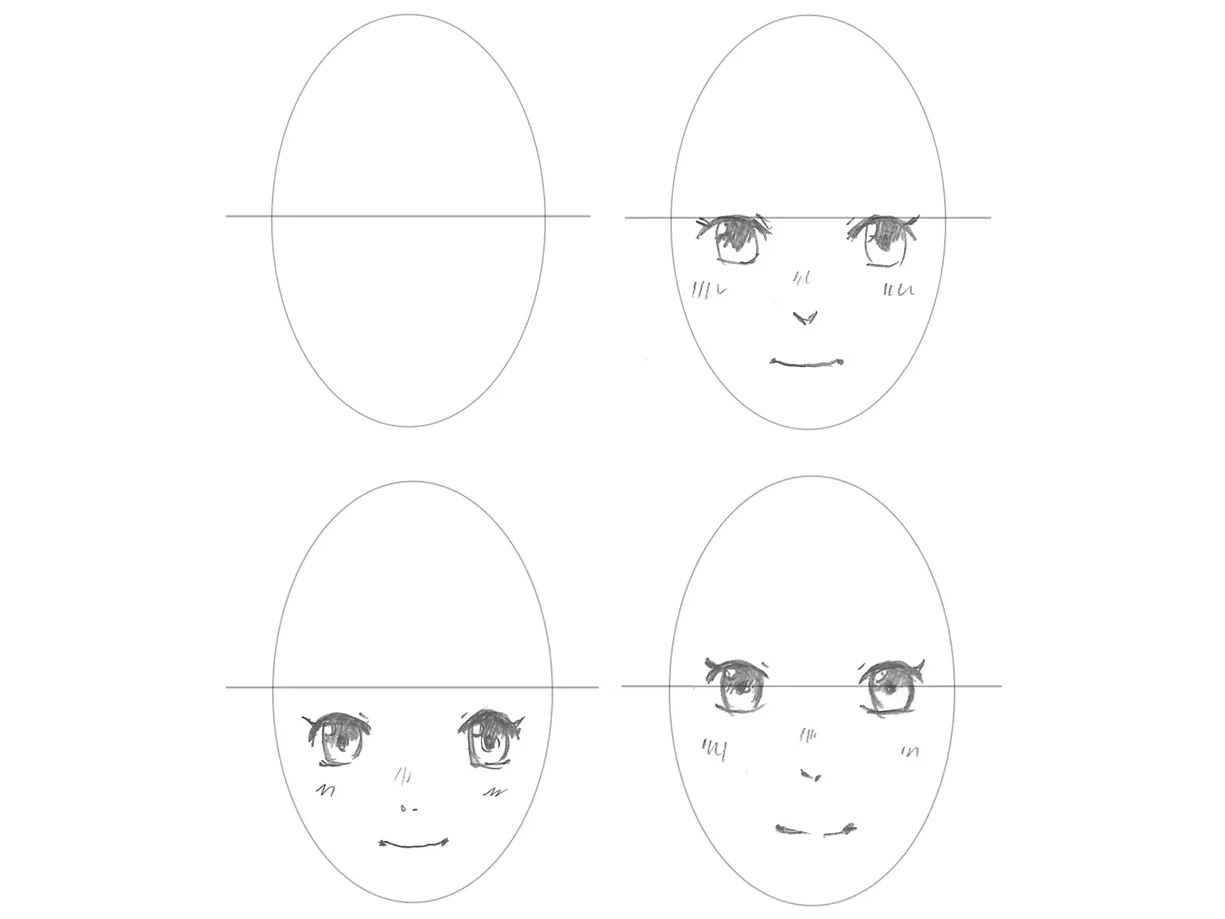
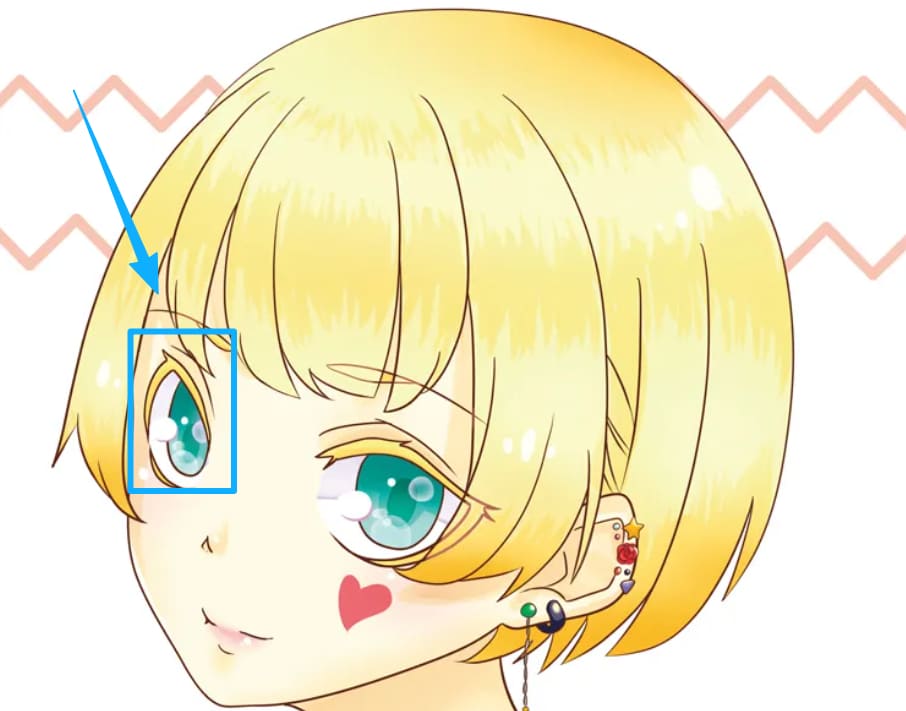
When drawing a face, first fix the eye position. This greatly reduces mistakes. Start by drawing a long oval as the basic head shape. Then draw a horizontal centerline across the oval. Use this line as the eye-height baseline.
(2) Side View Eyes Should Prioritize Design
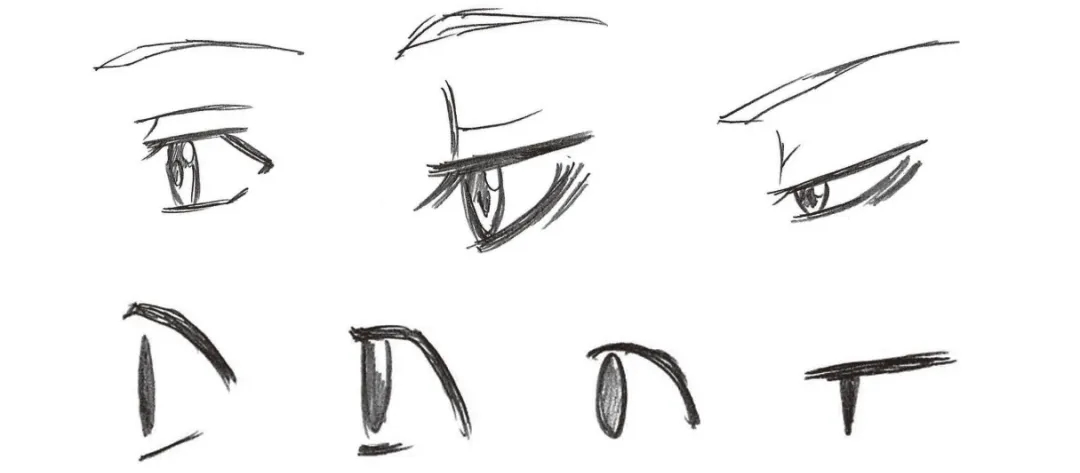
When drawing eyes from the side, accuracy is less important than feeling. We often use stylization to emphasize design.
Eye shapes vary by style. A key point is to draw the dark iris/pupil area thin and pushed forward, and let the white of the eye (sclera) form a roughly triangular shape.
(3) Use Rectangles to Help Draw Eyes in Three-Quarter/Side Views
When the head faces away from the front, spend more care on eye drawing. Don't just draw with flat lines. Imagine the eye is a rectangular sticker stuck to the curved face. Use two rectangles to mark the eye area.
In three-quarter or side views, the eye guide lines curve. Besides the horizontal guide, add a vertical guide so the two lines form a cross. This makes the head direction easier to read.
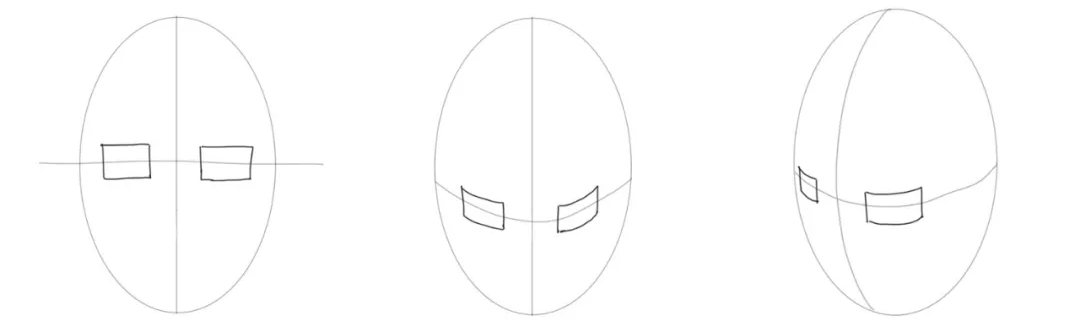
When the rectangle follows the curve of the head, draw the front-facing eye shape you would see from that curve. Note that the eye farther back on the face usually looks narrower.
(4) Simplifying the Nose, Mouth, and Ears
In real life, the nose, mouth, and ears are complex. In realistic art, they are the hardest parts to draw. But in anime, simplify them and aim for likeness rather than full realism.
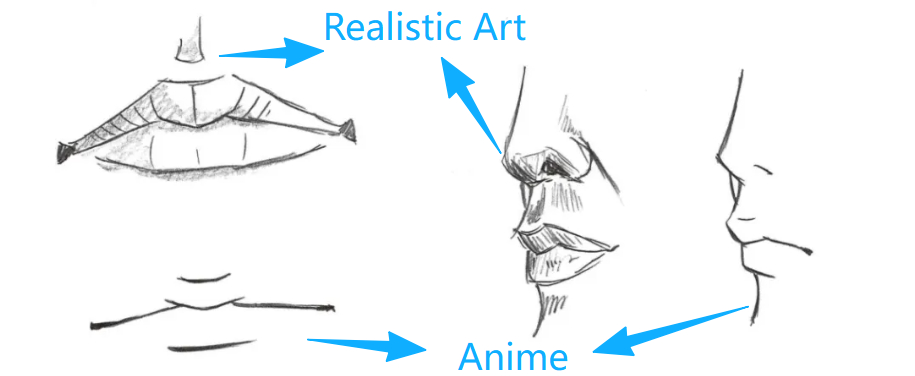
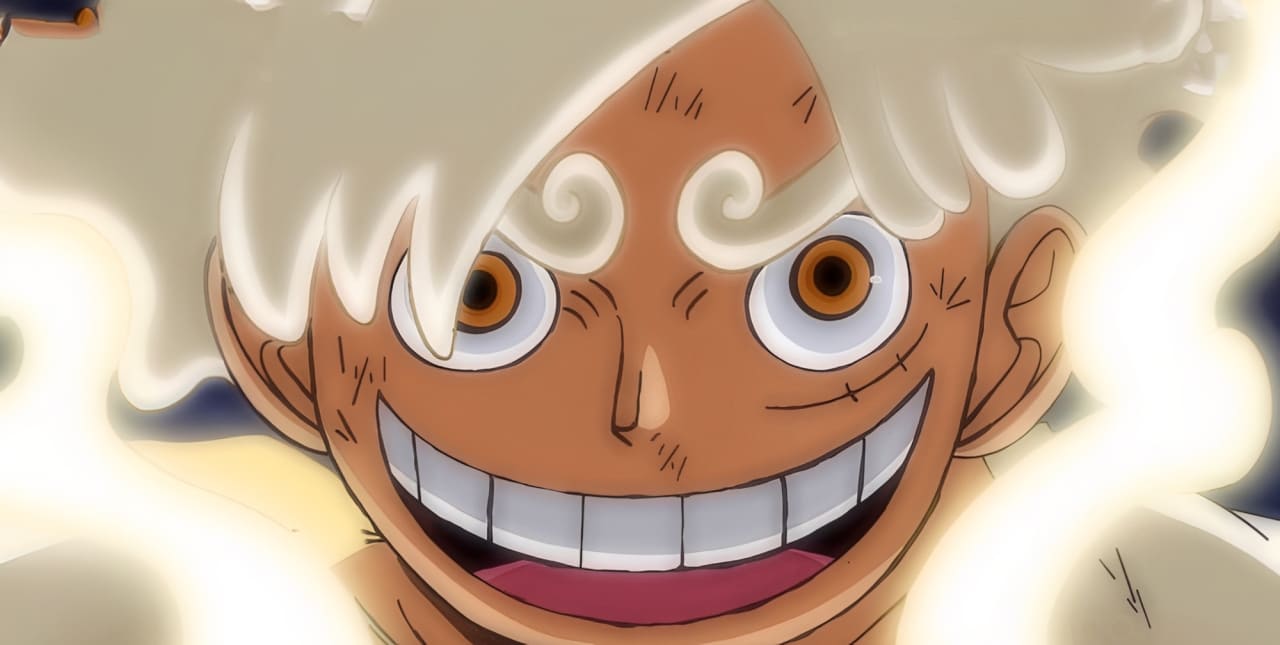
Lines matter a lot in manga. Adding a single line can change the whole look. For example, laugh lines on a real face show age. If you add those lines in anime, the character may look old.
Generally, anime has standard ways to draw facial features. You can study well-known anime characters for reference. For example, the nose is often just a dot or a simple line.
Ears are not very important in the overall face. They usually sit in the middle of the side of the head, slightly toward the back. The top of the ear is typically level with the eyes. Ears are not parallel to the head — they tilt a bit.
2. Body Drawing Techniques
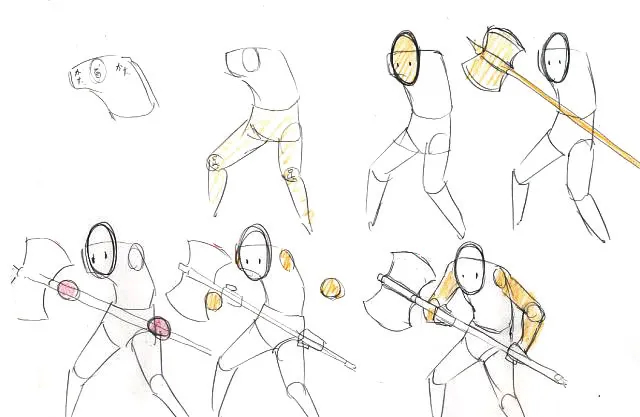
When you draw an anime character's pose, don't start by drawing the full body. It's easier to draw each part separately.
(1) Draw the Body's Parts Separately
Beginners often try to draw the whole outline in one go. But unless you are very practiced, that is hard. When the pose is complex, you may not know where to begin.
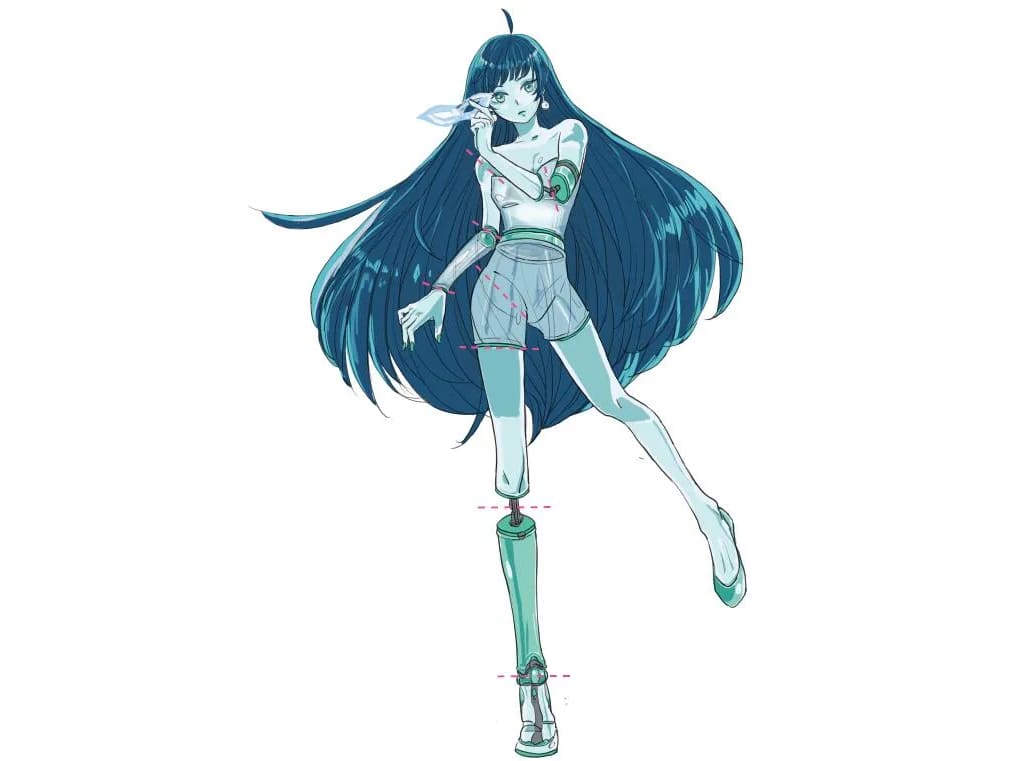
So we recommend breaking the body into parts and drawing them one by one. For example: arms, wrists, hands, thighs, calves, feet, chest, waist, and hips. After drawing each part, combine them in order.
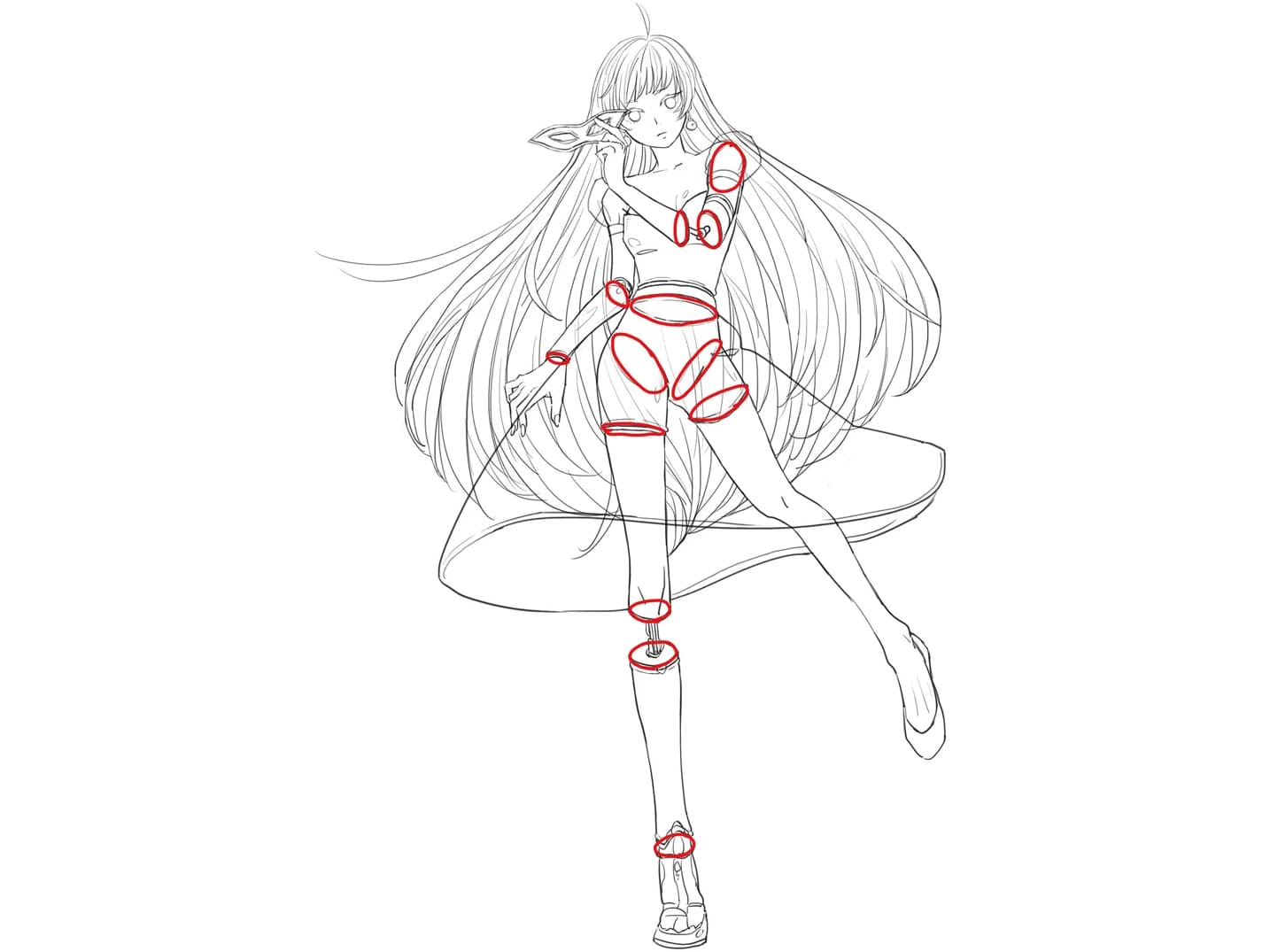
(2) Body Cross-Sections Are Ovals
When you draw parts separately, first mark joints like the waist, elbows, wrists, and knees with ovals.
Use two ovals as the start and end points for a limb, then connect them with a line. The ovals at the joints act as reference guides, so this method is easier than drawing everything directly.
Keep in mind that body cross-sections are closer to an oval, not a perfect circle. When separating parts, draw the joints as ovals too.
Suggestions for Getting Started with Anime Drawing
In the last section, we shared a few beginner tips that help when you actually draw anime. Becoming skilled at anime takes a long time. You can't learn all drawing and creation skills from one blog post or video.
So in this section, we want to share advice on how to get into anime more easily, not technical tips. With these ideas, starting anime drawing may feel easier.
1. Let Go of the Fear of Drawing Badly
Drawing anime is not a sketch exam. It is not a realistic painting. It's a visual language. It uses simple lines, exaggerated expressions, and clear shapes to tell a readable story.
So being clear is more important than being perfectly accurate. Having emotion matters more than looking exactly like the model.
If you are a complete beginner, the most important thing is to allow yourself to draw "childlike" or "imperfect" work.
2. Start with Basic Shapes, Not Details
Many beginners jump straight to eyes, hair, or clothes. That often makes the drawing messy.
The right order is:
- Learn basic shapes (circle, square, triangle).
- Use simple geometry to block in the head and body.
- Use basic structures to set proportions.
Drawing anime is basically "structure + simplification," not piling on tiny details.
3. Line Practice Is Simpler Than You Think
You don't need to draw hundreds of lines a day. You don't need perfect lines.
At the zero-base stage focus on:
- Relax your wrist and learn to draw confident strokes.
- Let line weight vary a little.
- Don't chase neatness — learn to dare to draw.
Anime lines should carry feeling. They aren't ruler-straight lines.
4. Facial Expressions Are the Soul of Anime
What makes comics appealing is not how detailed they are. It's that the emotion is readable at a glance.
Beginners can start with these:
- Basic emotions: happy / angry / scared / sad.
- Exaggerate brows, mouth shapes, and eye changes.
- Use simple features to show strong feelings.
If you can draw a face with clear emotion, you've already entered the world of anime.
5. Copying Is Not Cheating
For absolute beginners, copying is necessary. But do it the right way. People who copy well improve fast.
Correct copying means: Look at the structure, not just the details, and ask: Why is this line drawn this way?
6. Move from Single Drawings to Short Stories
When you can draw a basic character, try:
- One character, many expressions.
- Two characters, simple interaction.
- A three- or four-panel mini comic.
The goal of anime is not only "to look good." It is "to tell a story."
7. Consistency
The most important thing for zero-base learners is consistency.
You don't need long sessions every day. You do need regular practice. Anime skill builds bit by bit. It doesn't come all at once.
You can draw for just 10–20 minutes a day. But be sure to stick with it — don't start and stop all the time.
8. Use Tools That Improve Your Efficiency
If you decide to start your anime work, you might buy a graphics tablet or an iPad and learn digital painting software. More and more people prefer digital painting, and digital art shares more easily on social media.
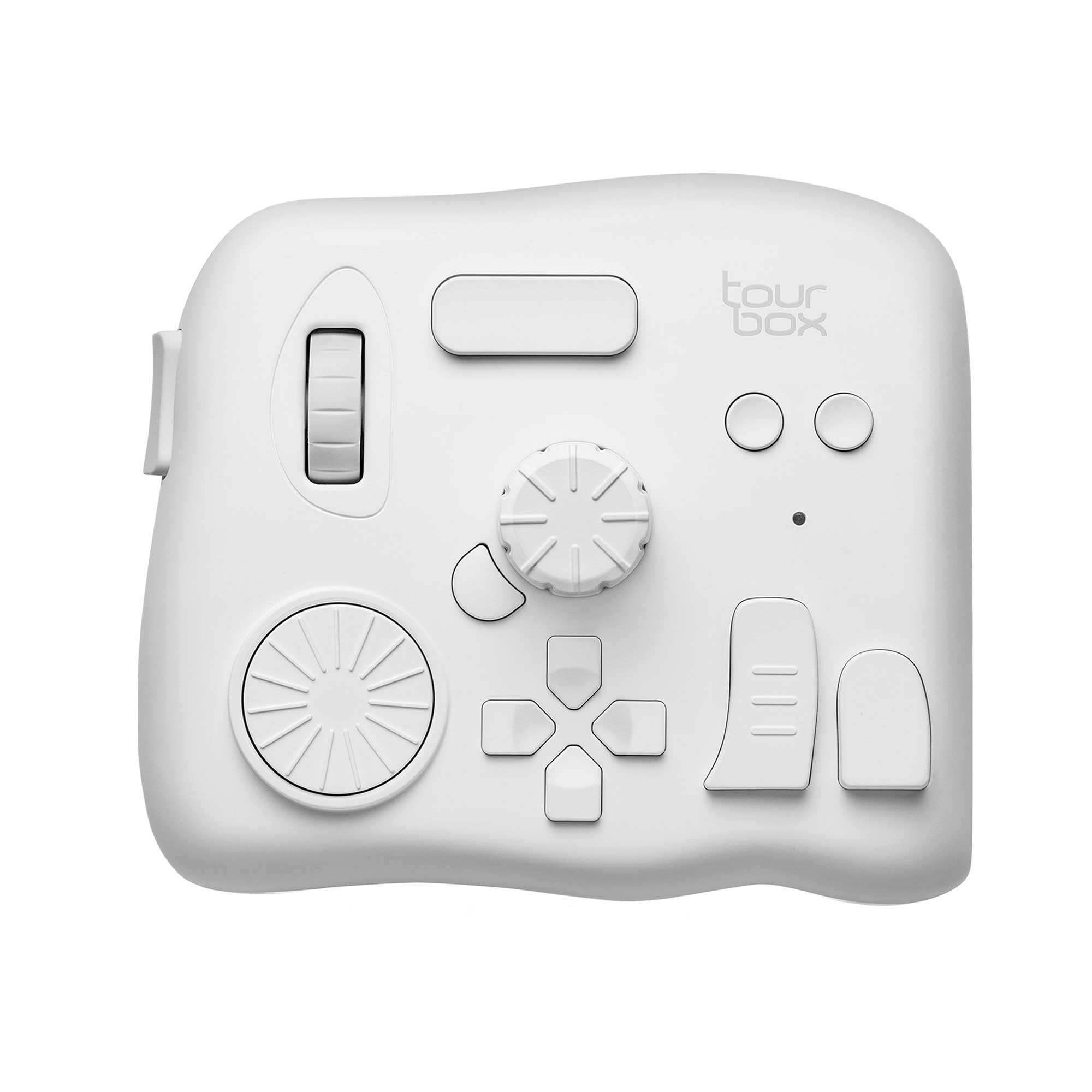
Besides that, if you have a tool that boosts your workflow, you can focus on creating instead of wrestling with software features. TourBox is a creative controller that simplifies complex tasks and is loved by many manga artists, digital artists, and other creators.
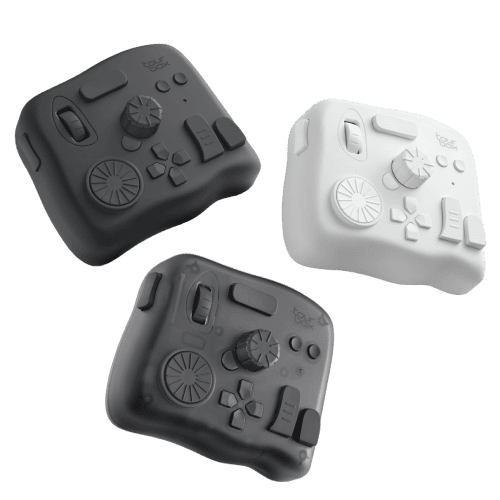
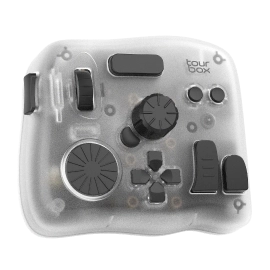
You can map common functions and shortcuts to TourBox's physical buttons and knobs. TourBox also includes many built-in features that further simplify your workflow. If you like to create on a tablet like an iPad, check out our Elite Plus model.
Please click our Digital Painting page to learn more.
Conclusion
If you've always wanted to draw anime but felt blocked by "no basics," remember: basics aren't a barrier — they're part of the process. As long as you're willing to make the first stroke, you're already on the path to becoming an anime creator.


