What Is the Core Photography Composition?
Are you also obsessed with all kinds of composition rules — like the golden ratio and leading lines — and find yourself rigidly following these rules, falling into a trap of formulaic compositions and techniques when you shoot?
But actually, photography composition isn't that complicated. You only need to master one core rule. And that rule is really simple — so simple that most people know it, yet often ignore it when shooting.
So what's this core compositional tip? Let's get straight to the point.

In this article, you will learn:
- What Is the Core Photography Composition in Photography?
- When Should You Subtract and Add in Photography Composition?
- What Kind of Composition Should You Use?
- Conclusion
What Is the Core Photography Composition in Photography?
If you are a photographer, you've probably heard at least some of these photography composition:
- Rule of thirds (grid / tic-tac-toe / golden ratio)
- Centered composition (symmetry)
- Leading lines (converging lines)
- Diagonals (X-shaped composition)
- Contrast composition
- Foreground / middle ground / background composition
- Triangular composition
- Perspective composition
- Repetition
There are so many composition techniques. Here we only listed some of them. Even if you're not familiar with most techniques, you surely know the most famous one: the rule of thirds.
So what is the core photography composition? It's really simple—so simple that most people already know it but choose to ignore it. It is this:
Think about and confirm the photo's subject, or the theme you want to express, before shooting.
Really? You might shrug when you read that. But let's put it another way:
Most people fail at composition not because they don't know the rule of thirds or symmetry, but because they never think about what the photo's subject or theme is. They shoot by feel, by chance, or just apply various composition rules like templates.
"Feels right." "Looks nice." "Seems to match the golden ratio — great!" Do you often press the shutter without thinking about which subject you want to emphasize, what theme you want to express, or what final effect you want?
We can extend this further and find another surprising fact: Most people are bad at post-processing, not because they don't know Lightroom or Photoshop, but because they never thought about what they want the final image to look like!

With a clear core principle for composition, we can also spot many widely spread but sloppy claims.
Wrong claim 1: Photography is an art of subtraction.
Correction: Photography is both subtraction and addition. The core is knowing the subject and the theme. Remove elements that distract from the subject or don't fit the theme. Add elements that support the subject or help express the theme.
Wrong claim 2: Don't put the subject in the center; put it at the one-third point.
Correction: Which geometric composition you use depends on your subject and theme. Rule of thirds works well for natural, relaxed scenes. Centered composition works for very large subjects, serious or formal scenes, or when the subject is naturally symmetrical.
We want to stress this again: Most people fail at composition not because they don't know the rule of thirds or symmetry, but because they never think about the photo's subject or the theme they want to express.
When Should You Subtract and Add in Photography Composition?
Once we understand that the core of composition is to confirm the subject and the theme, we naturally know what to add to the frame and what to remove:
- Elements that help highlight the subject or express the theme can be added to the frame.
- Elements that are unrelated to the subject or that interfere with it should be removed from the frame.
- With the same scene, if we change the subject or the theme, we must change the composition too.
For example, consider this scene:

If our subject is the snow-capped peak and the theme is to show its grandeur, then the first image clearly has too many compositional elements. The foreground grass does not support the mountain's grandeur. Instead, it takes up a lot of space and makes the mountain look small.
So we need to subtract. Remove the unrelated foreground grass and the midground sea of clouds, and change the composition like this:

Should we keep subtracting — remove the person too and give the mountain a close-up?
In the image below, the mountain fills more of the frame, but it feels less majestic than the previous version. That's because we removed the person who echoed the mountain and helped show its scale.

So subtraction in photography is not simply removing everything except the subject. We only remove elements that do not support the subject or the theme. Elements that relate to the subject or theme should stay in the frame. Don't remove them thoughtlessly.
In the composition above, our goal was to highlight the might of the peak, so we needed to subtract.
But if we change the theme — say the goal is to show the vast scenery at that moment — then we do not subtract. We add. Use a wide, panoramic composition and bring more elements into the frame.
In the composition below, the mountain looks smaller, but that's okay. We are not trying to emphasize the mountain's size. We want to show the whole sunset scene. So we include the grass, the person, the mountain, the sea of clouds, and the sun — all of them.

Also note: adding is not rule-free. You can't add anything you like. Only elements that express the natural grandeur — like a sea of clouds or a sunset—should be added. If there are elements that ruin the mood, like utility poles or radio towers, we should never include them.
From the example above, we can draw one lesson:
There is no single best composition. There is only the composition that suits your subject and your theme.
The same scene calls for different compositions if your subject or your theme changes.
What Kind of Composition Should You Use?
The New York Institute of Photography once said in its teaching materials:
"Over the years, teaching thousands of students at the New York Institute of Photography, we've found that so-called composition rules only confuse students. The success or failure of a photo has little to do with these rules. The only rule photographers all agree on is: 'Every rule is meant to be broken!'"
All composition rules — rule of thirds, leading lines, centered symmetry, and even the idea that "every rule is meant to be broken" —exist to serve the photo's subject and theme.
Once we understand that the core of composition is confirming the subject and the theme, we naturally know when to use the rule of thirds, when to use centered composition, and when to go our own way.
For example, the rule of thirds (placing the subject at one third of the frame instead of in the center) is a composition many photographers know. The reason the rule of thirds works well is simple: putting the subject dead center can feel stiff and formal, while placing it too far to the edge can unbalance the frame. Placing the subject near the one-third line usually fits just right.
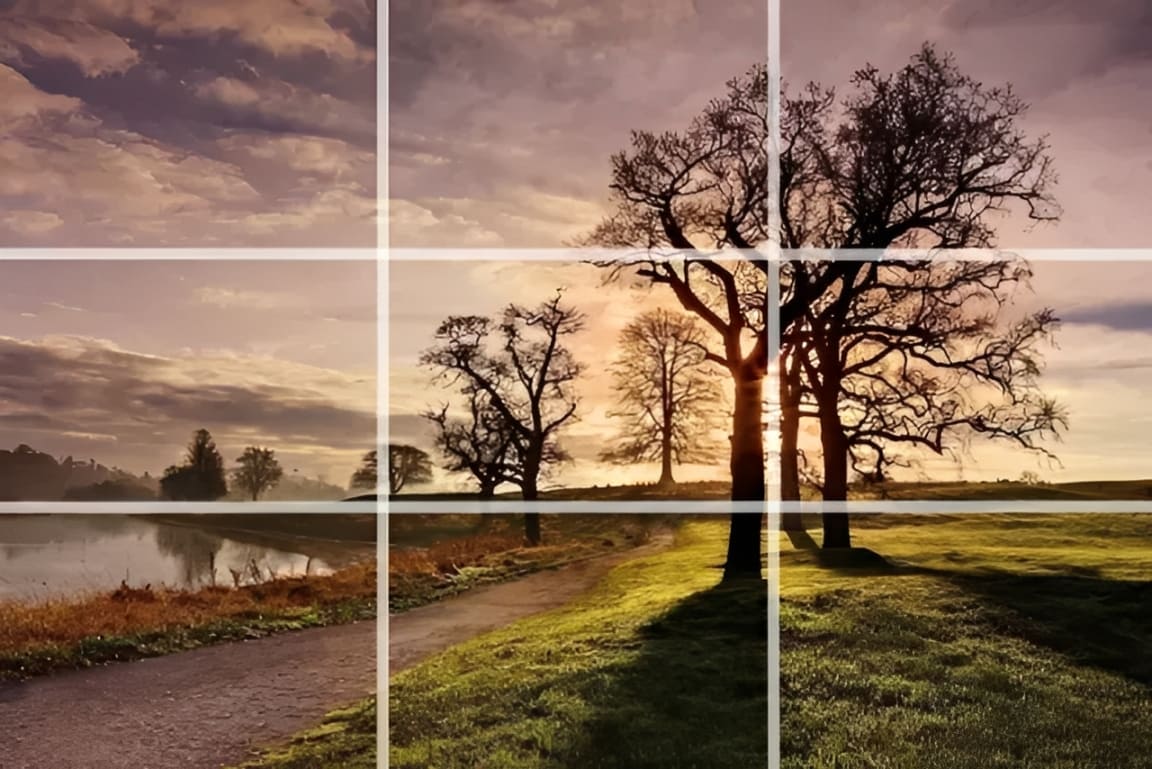
The rule of thirds serves the subject. It makes the subject less stiff while keeping the frame balanced. Once you get that, you can see situations where the rule of thirds is actually worse than centered, symmetric composition.
One case is when the subject and theme are serious or formal, like a church, a palace, or a meeting. Centered, symmetric composition suits those scenes better. (Think about it: travel portraits rarely put the person dead center, while passport or professional headshots almost always do.)

A second case is when the subject itself is very large. Even placed at one-third, it can still unbalance the frame. If the subject fills much of the frame and there's nothing else to balance it, you'll need to place it near the center.
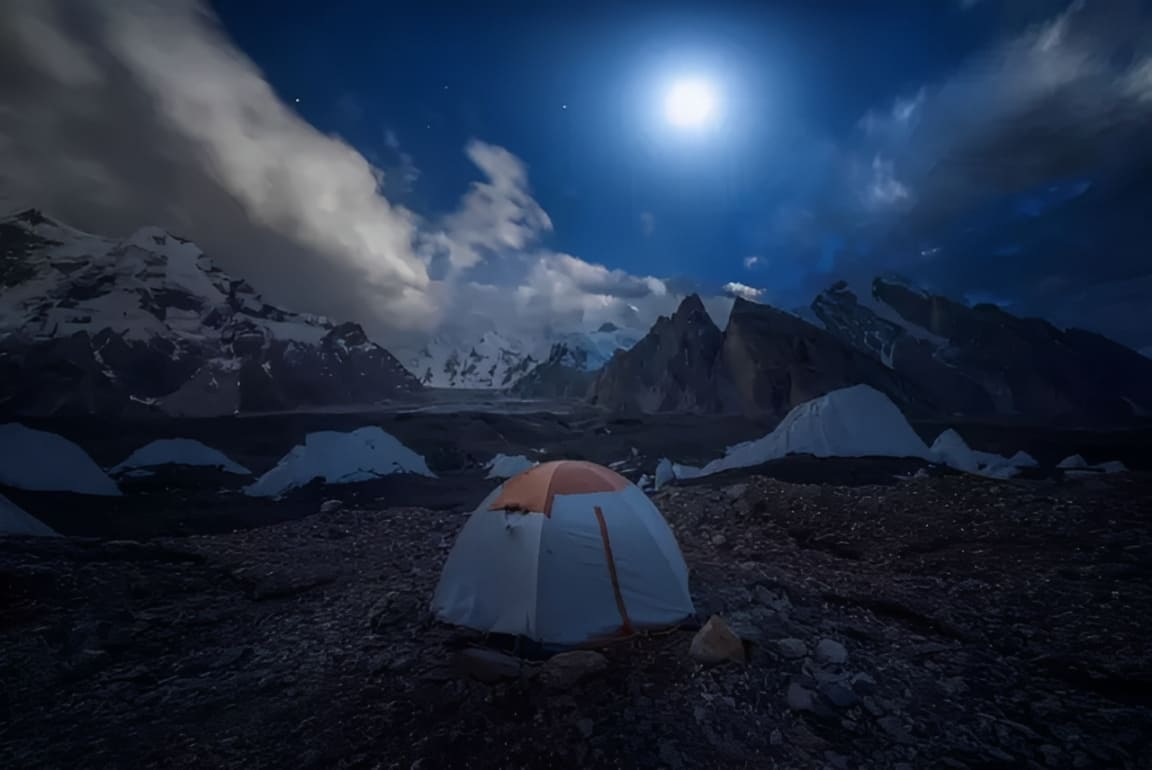
A third case is when the subject is naturally symmetrical, like a reflection. Symmetric composition often expresses that best.

Once you understand that any composition rule is meant to serve the subject and the theme, you can choose the rule that fits your subject. You can even break the rules and try something different.
Conclusion
In this blog post, we shared the core compositional tip in photography: identify the photo's subject and theme. Now let's try to sum up:
- Most people fail at composition not because they don't know the rule of thirds or symmetry, but because they never think about the photo's subject or the theme they want to express. They shoot by feel, by chance, or just apply various composition rules like templates.
- Photography is both subtraction and addition. The key is knowing the subject and the theme. Remove elements that distract from the subject or don't fit the theme. Add elements that support the subject or help express the theme.
- All composition rules — rule of thirds, leading lines, centered symmetry, and so on — exist to serve the photo's subject and theme.
See? Composition is never a set of rigid rules, and it's really very simple!
Of course, a good composition can be refined not only during shooting but also in post. If you are a photographer who does a lot of retouching, repetitive and slow tasks can really drain your passion. So we want to recommend TourBox — a controller that simplifies every step of photo post-processing.

You can map your frequently used functions and shortcuts to TourBox's physical buttons and dials. Like using a game controller to play a video game, it helps your workflow feel faster and more intuitive.
When you change values, instead of straining to drag sliders with a mouse, use TourBox's tactile dial to make precise +1 or −1 adjustments and actually feel the change with each turn.

TourBox is not just a shortcut mapper. It has many built-in and advanced features waiting to be explored. If you're interested, check out our Photo Editing page to learn more.


