Rolling Shutter Effect Explained: What It Is and How to Reduce It
When shooting fast-moving scenes, have you ever noticed straight lines in a photo or video suddenly bending, or the whole frame wobbling like jelly? That is often called the "rolling shutter effect." It may not look very serious, but it can often affect how a shot looks and how professional it feels.
In this blog, let's take a closer look at what the rolling shutter effect is.

In this article, you will learn:
- What Is Rolling Shutter Effect?
- The Relationship Between Shutter Type and Rolling Shutter
- How to Reduce the Impact of the Rolling Shutter Effect?
- Conclusion
What Is Rolling Shutter Effect?
Rolling shutter refers to a kind of image distortion that happens when a camera reads the sensor line by line while capturing fast-moving scenes. It is common when shooting objects that move very quickly. It often shows up as distortion, tilting, or wobbling in the image, almost like jelly shaking. That is why it is also called the "jello effect."
For example, in the image below (source: Wikipedia):

You can see that when a helicopter is being photographed, the fast-spinning rotor blades at the top are badly distorted, while other objects that move more slowly are almost unchanged.
In general, the way the jello effect appears depends on how the subject moves relative to the camera:
- For horizontal movement, the subject usually looks tilted or stretched. For example, a vertical utility pole may appear slanted in the frame.
- For vertical movement, the object may look compressed or stretched. For example, a fast-moving elevator may look flatter.
- For rotating objects, such as rotor blades or fan blades, the result may be bending, breaking, or a "sticking together" look, as shown in the example above.
It is important to note that this is about relative motion, not just the motion of the object itself. For example, in the photo below, a van is shot from a car that is moving at high speed.

Even though the van on the roadside is not moving, the photo was taken from a car moving fast, so there was still relative motion. As a result, the rolling shutter effect still appears.
The Relationship Between Shutter Type and Rolling Shutter
As mentioned above, the jello effect is caused by how a rolling shutter works. Besides rolling shutter, there is another way a sensor can capture an image called a global shutter.
In simple terms:
- A rolling shutter reads the image line by line, like scanning from top to bottom.
- A global shutter records the whole frame almost at the same time.
You can think of global shutter as the opposite of rolling shutter, but not as a more advanced version of it. Global shutter is less likely to cause distortion, while rolling shutter is more common and usually cheaper.
1. Rolling Shutter and the Jello Effect
With a rolling shutter, the camera does not capture the whole frame at once. Instead, it scans the image line by line. Each line is read at a slightly different time. While one line is being read, the other parts of the sensor are still being exposed, and the image is not fully formed until each line is read.
Because the lines are not read at the same time, there is a time gap between them when you shoot fast-moving subjects. This time gap is what causes the jello effect.
For example, the GIF below is a clear case. When a spinning disk is shot, the line-by-line scan creates visible distortion in the image:

2. Global Shutter
Now, let' look at global shutter. As the name suggests, unlike rolling shutter's line-by-line scan, global shutter means all pixels are captured at the same time.
Because all pixels are recorded at the same time, there is no time gap between image lines like there is with rolling shutter. That naturally helps avoid the jello effect.
How to Reduce the Impact of the Rolling Shutter Effect?
Finally, let's look at how to reduce the rolling shutter effect.
1. The Best Fix: Change Gear
The most direct solution is to switch to a different camera.
If you use a camera with a global shutter sensor, whether CMOS or CCD, you can solve the rolling shutter effect at the source.
Extra Tip:
Camera sensors are generally split into two main types: CCD and CMOS. CCD is an older sensor type, while CMOS is now the mainstream choice.
CMOS sensors are usually cheaper. And most mainstream CMOS sensors use a rolling shutter exposure method, which is why the rolling shutter effect is more common on most CMOS cameras. There are also CMOS sensors with global shutter, but they are still relatively expensive at the moment. As technology keeps improving, the cost of global shutter CMOS sensors will likely keep going down, and more of them will appear on the market in the future.
CCD sensors are mostly global shutter by nature, which comes from how they are built. Even though CCD sensors also read out line by line, each pixel's data has already been fixed during charge transfer. This makes them work much like a global shutter, where all pixels are captured at the same time.
2. Reduce the Effect: Use a Faster Shutter Speed
Of course, if you do not want to change gear, you can also reduce the effect by using a faster shutter speed.
As mentioned above, rolling shutter works by scanning the image line by line. The jello effect happens because there is a time gap between each line of pixels. So if we shorten the time it takes to capture each line, we can reduce that time gap and lessen the effect.
But increasing shutter speed also means reducing exposure time.
To avoid underexposure, you may need to open the aperture wider or raise the ISO. That also means you need to consider the trade-off of a shallower depth of field and more noise.
3. Shoot with a Mechanical Shutter
Besides the methods above, using a mechanical shutter can also help reduce the jello effect to some extent.
That said, a mechanical shutter is limited by its physical structure, and not every camera supports shooting with a mechanical shutter.
Conclusion
Let's wrap up the key points about rolling shutter effect:
- The jello effect can distort images and is common in high-speed shooting.
- Rolling shutter is the cause, because it reads the image line by line with slight timing differences.
- Global shutter can solve this, since it captures the whole frame at once without distortion.
- CCD sensors usually have global shutter, while most CMOS sensors use rolling shutter.
- If you do not want to change gear, you need to shorten the exposure time.
Good photos need more than just a good shoot. Editing in post is just as important. So at the end of this blog, we would like to recommend TourBox, a creative controller that many photographers, especially portrait and commercial photographers, love.
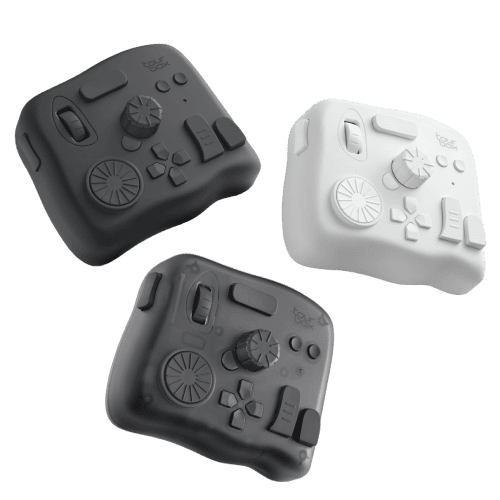
With TourBox, you can greatly improve the speed of your photo editing and color grading. You can map the tools and shortcuts you use most in your editing software to TourBox's physical buttons and dials. Handy built-in features, such as the Dynamic Panel designed for Lightroom, can also make your workflow much smoother.
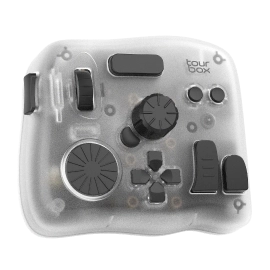
TourBox dials are also more precise and fine-tuned than mouse sliders. You do not need to keep looking at the slider position. With tactile feedback, control becomes much easier, and you can make the most detailed adjustments allowed by your editing software. To learn more about TourBox, please visit our Photo Editing page.


