What Is Pixel Art? Definition, Origins, and Evolution
When it comes to pixel art, you are probably already familiar with it, especially if you are a gamer. From classic games on the NES and arcade machines, like Super Mario Bros. and Street Fighter, to more recent hits like Sea of Stars and Animal Well, these great pixel games have given us many good memories.
Pixel art often feels indie and retro. It is widely used in commercial illustration and fashion design.
But do you really know what pixel art is? Are you curious about where it came from and how it developed? And in a time when VR and AR are already quite advanced, and display resolutions have climbed to 4K, 8K, and even 16K, why is pixel art still so popular? Let us take a closer look in this blog.
In this article, you will learn:
- What Is Pixel Art?
- How Did Pixel Art Emerge and Develop?
- Why Pixel Art Looks Simple but Is So Hard?
- Common Misunderstandings About Pixel Art
- Conclusion
What Is Pixel Art?
The word "pixel" comes from "picture" and "element." It means a part of an image, and it is the smallest unit that makes up a picture.
In essence, a pixel is a small point in an image. In a camera or sensor, light is first captured by the image sensor and then goes through a series of steps before becoming part of the final image. One point on the image represents one pixel, and it is the smallest unit of the picture. The size of pixels in the same image is fixed, and each pixel can store only one color at a time.
On a computer screen, these points are arranged in a grid, and together they form the image we see. That is what pixel art is.

In the late 1970s and early 1980s, computer screens had low resolution and very limited colors. But this gave pixel artists a place to create. By working with only a small number of pixels and colors, they made pixel art with a unique charm.
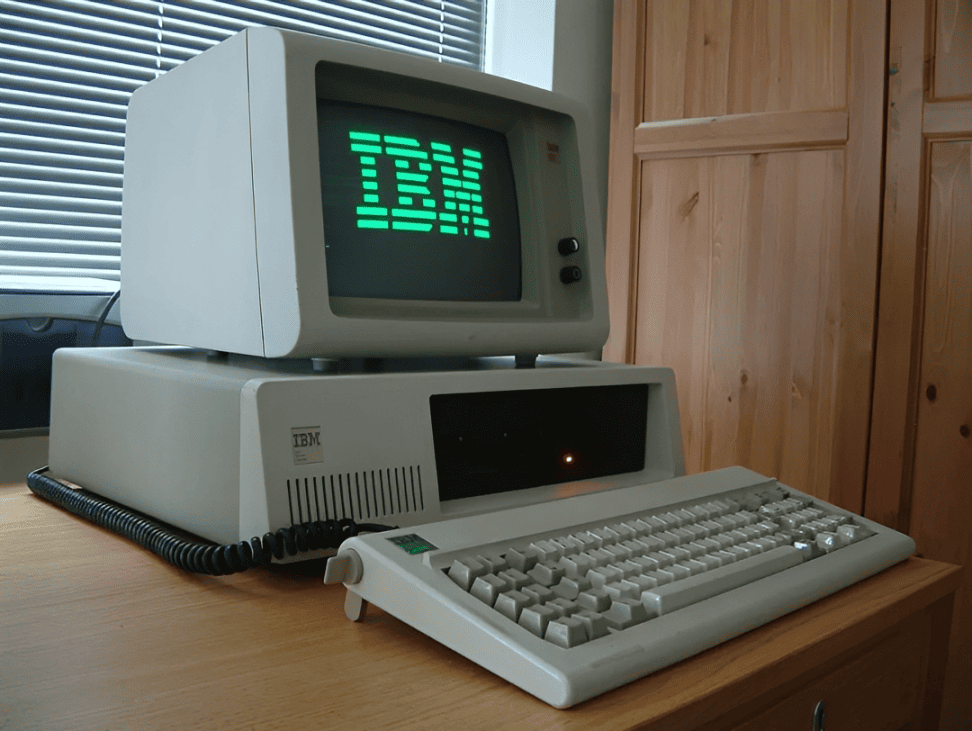
Early pixel art appeared mainly in video games, such as classic titles like Pac-Man and Space Invaders. Although these games had low resolution and few colors, they became classics in the history of pixel art.
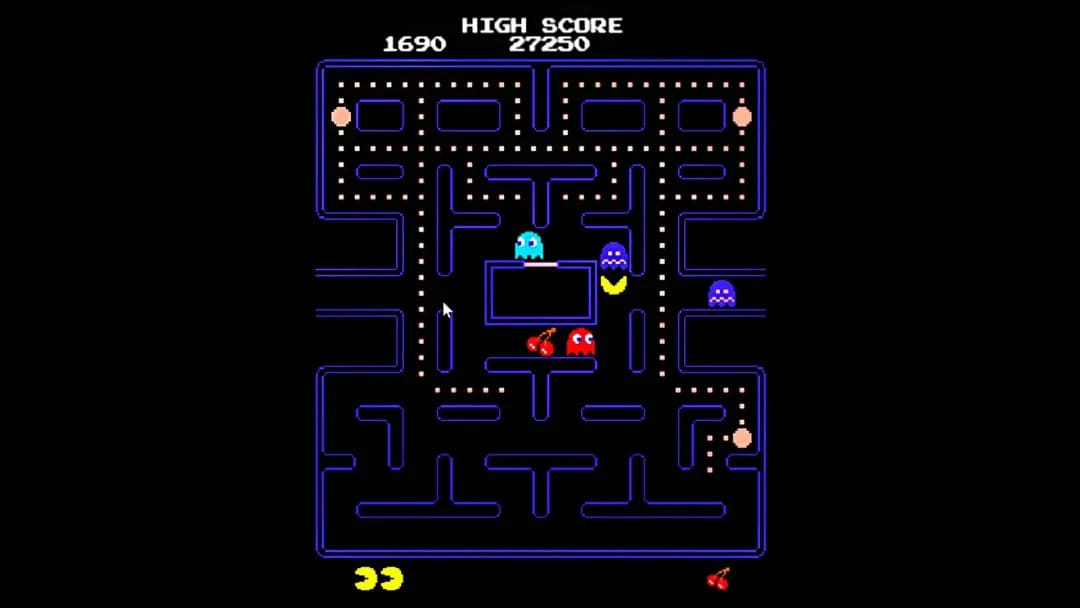
Pac-Man
As technology kept improving, pixel art slowly grew into a separate digital art style, especially among illustrators and designers. It focuses on working with traditional pixels. Each pixel can hold only one color, which gives pixel art its special look and appeal.
Today, pixel art is widely used in many fields, such as web design, game design, animation, and illustration. With its unique visual style and charm, it has attracted more and more artists and pixel art fans.
How Did Pixel Art Emerge and Develop?
The origins of pixel art can be traced back to the birth and early growth of computer graphics. In the early days of computers, pixel images were the best way to show visuals within limited screen sizes. In 1984, the first icons in Apple's original Mac system were classic 1-bit pixel images.
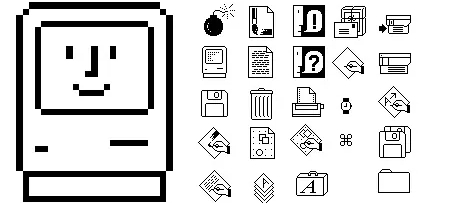
In 1982, Apple also developed MacPaint, a bitmap editing program made for the Mac operating system. It already showed signs of what we now know as drawing software. Users could create a 416 × 240 canvas and draw with preset shapes and texture patterns.
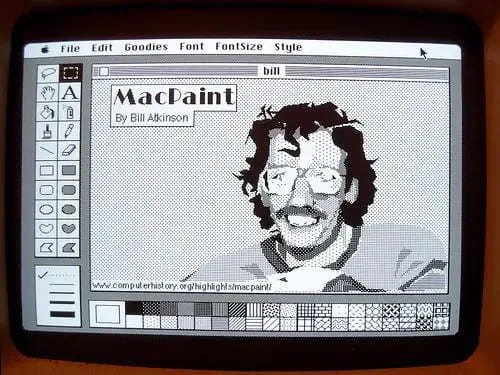
A self-portrait drawn in MacPaint by Bill Atkinson, the program's creator
In the end, however, the software was discontinued in 1998 because it did not sell well. At the time, computer designers could already see the huge future of digital images and invested a lot in research and development. But in reality, things did not go as smoothly as they had hoped.
Luckily, game developers picked up the torch and kept pixel art moving forward.
In 1983, Nintendo's Famicom was released and became a milestone in video game history. Driven by competition and new technology, game developers gradually found an efficient and practical way to create graphics, and that helped shape the pixel style we know today.
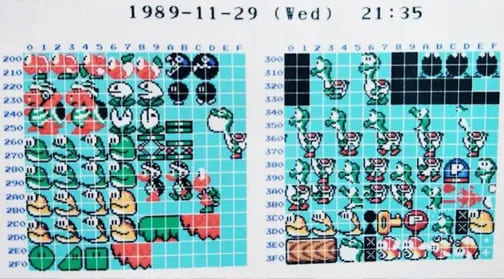
First, games needed to run smoothly and show images clearly, so the visuals had to be simple and effective. That is why pixel art uses clean outlines and strong color contrast, while leaving out details that are hard to show and keeping only the most important features.
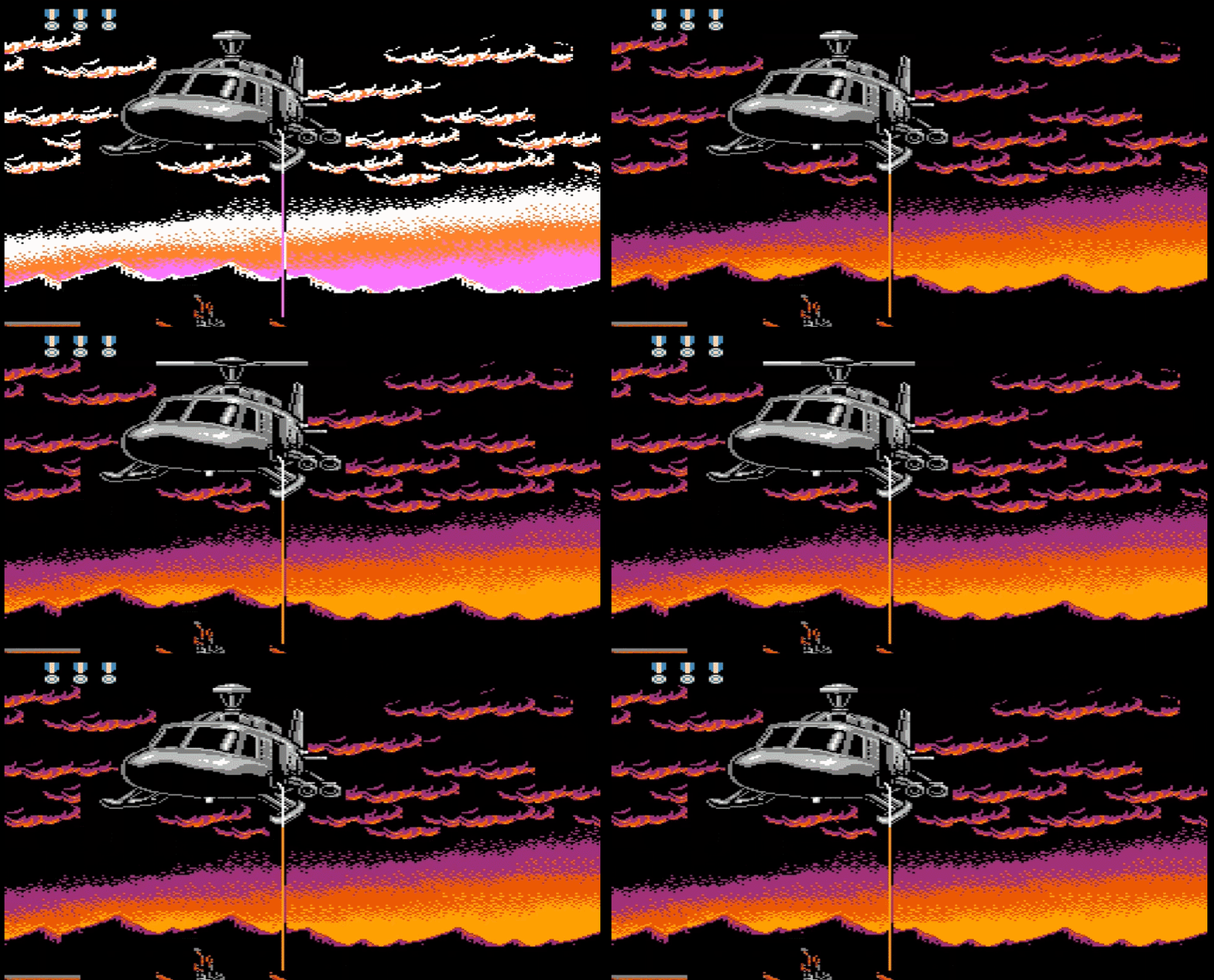
In addition, to create a richer look within a limited color range, games often used color dithering. By mixing colors between neighboring pixels, they could turn 4 colors into 22 shades and trick the eye into seeing more color and depth.
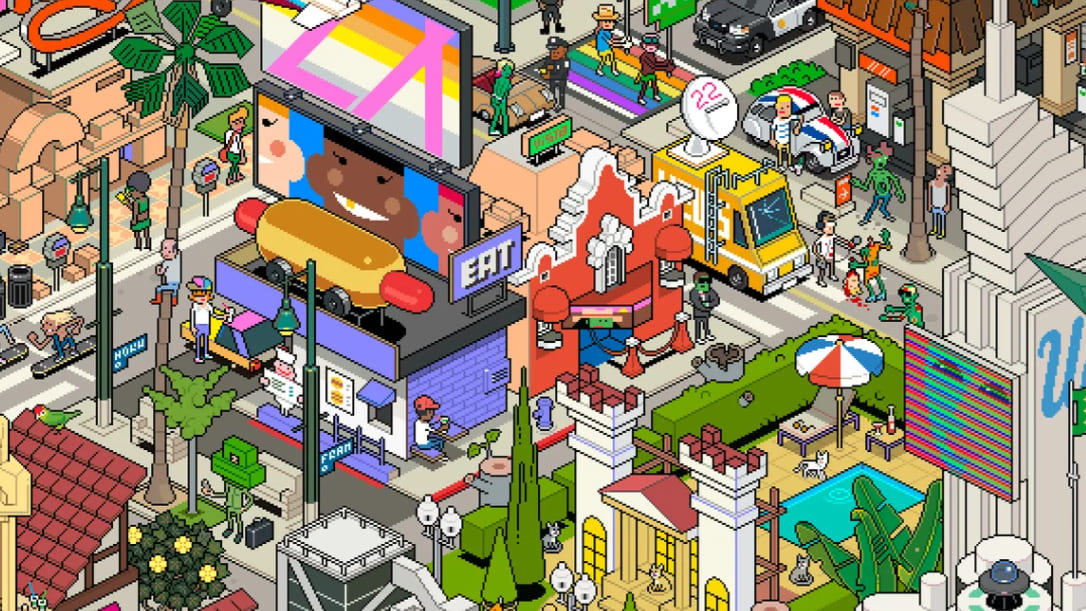
Outside of games, pixel art also shone in illustration. One standout example is the eboy team, founded in 1997. They are especially good at using dense pixel art in public spaces, products, posters, and many other commercial projects. Their work creates a unique balance between simple and complex, and has won them many fans and clients around the world.
Today, pixel art has grown far beyond its original role as a basic computer image style. It has become a unique form of digital art. The pixel style that was once criticized as rough and stiff has now become a symbol of simplicity, clarity, and easy sharing.
Why Pixel Art Looks Simple but Is So Hard?
What makes pixel art unique is that its basic building block is not a line or a large brushstroke, but individual pixels. No matter how simple or complex the image is, pixel art always depends on two core rules: first, it is built one pixel at a time; second, each pixel can hold only one color.
Compared with other forms of art, pixel art is more like placing, combining, and coloring small blocks one by one. Because of that, it naturally has a strong sense of order and control.
Each color block has a fixed size, so there is no problem with brushstrokes being too big or too small. The artist just needs to arrange these pixels based on the needs of the image, slowly building lines, shapes, and the full picture.
This way of working also has a clear advantage: it is easy to edit. If something does not look right, you can adjust it right away. If something is unnecessary, you can remove it quickly. Even with just a pen and a sheet of grid paper, anyone can start trying pixel art right away.
That is also why pixel art often feels relaxed, neat, and even a little healing. Our brains naturally prefer information that is simple, organized, and easy to understand. The clearer and more controlled an image is, the less effort it takes to process, and the easier it is for people to feel calm and happy.
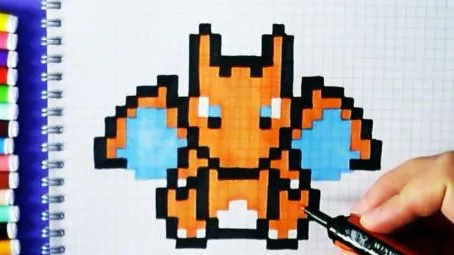
Also, when it comes to space, pixel art is often less limited by perspective rules than traditional painting. It feels freer and more direct. Artists do not need to worry too much about complex techniques at the start. As long as they have an idea, they can begin building it with pixels first.
But that does not mean pixel art is a way to take the easy road. It also does not mean it has a low barrier to entry.
In fact, because pixel art has such limited room for expression, artists need even stronger skills in simplification and abstraction. You have to first break down a complex subject, then use as few pixels as possible to show it clearly and accurately.
And that is exactly the hard part. It takes a lot of observation, thinking, and practice before you can really use it with ease.
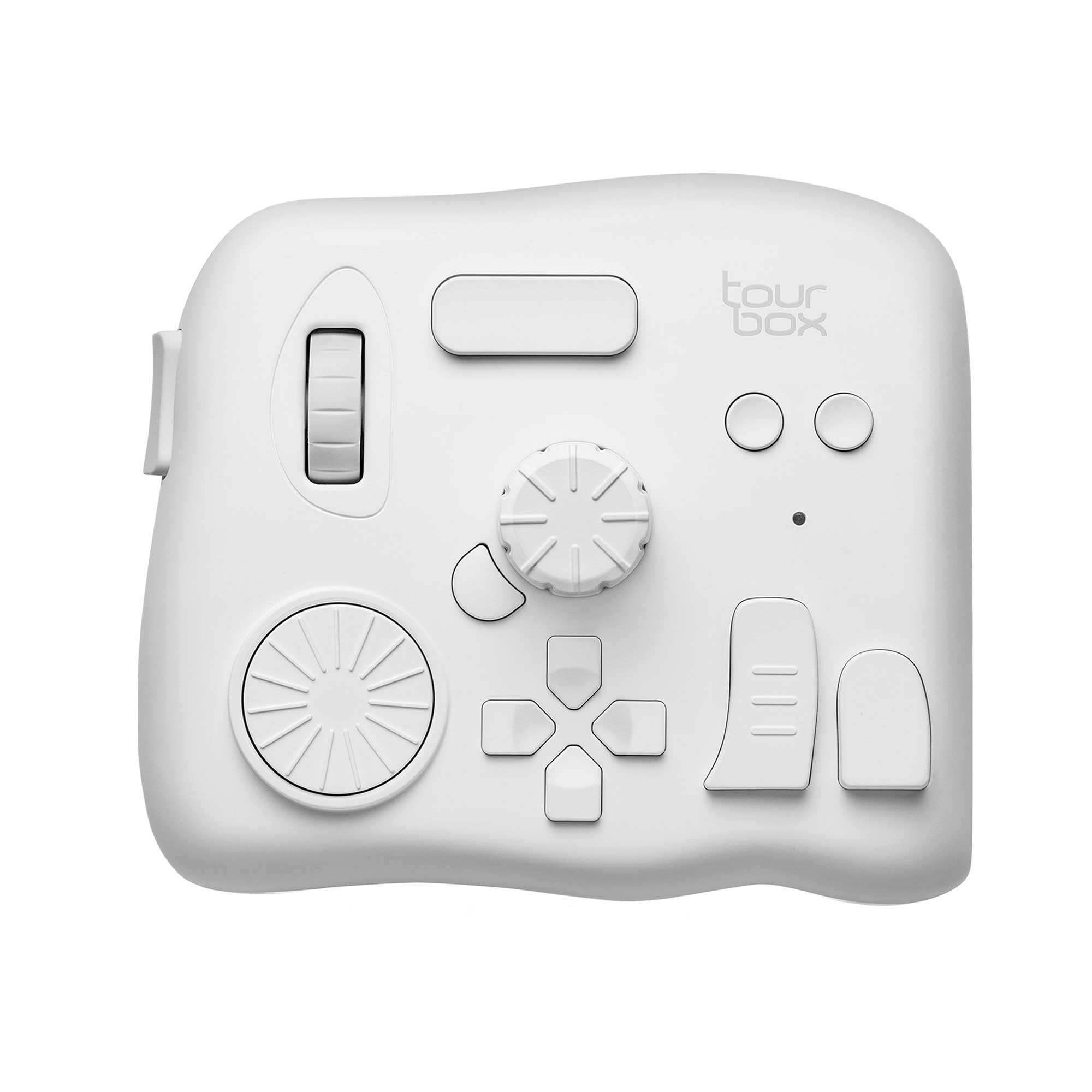
If you plan to learn and create your own pixel art, regular practice is essential. But using TourBox as a creative helper can also make the whole process easier and more efficient.
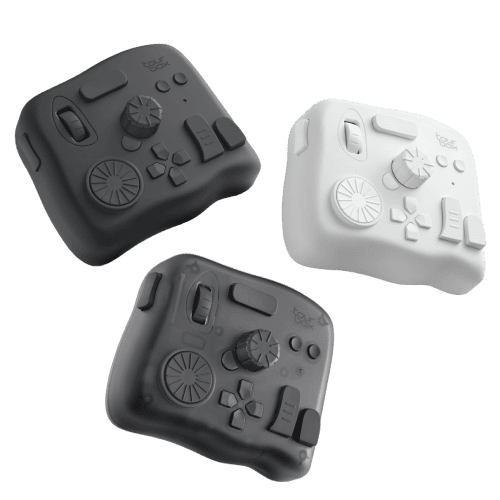
Digital artists usually hold a pressure-sensitive pen in one hand and search for complicated shortcuts on the keyboard with the other. TourBox gives you a special layout of dials and buttons, so you can do everything with one hand, such as rotating the canvas, zooming, switching brushes, and adjusting settings.
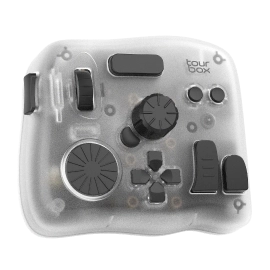
This keeps the creative flow going, reduces interruptions, and keeps your ideas from being slowed down by too many shortcuts or tool searches. If you are interested in TourBox, feel free to visit our Digital Painting page to learn more.
Common Misunderstandings About Pixel Art
Misunderstanding 1: It Is Just Mosaic Art
Pixel art is not mosaic art. Mosaic art first appeared in the Eastern Roman Empire, also known as the Byzantine Empire, as a form of wall decoration made from small pieces. Pixel art may look somewhat similar to mosaic art, but it is built on digital pixels. Mosaic art is closer to a traditional craft or decorative art form.
Misunderstanding 2: Making an Image Blurry or Compressed Means It Is Pixel Art
Pixel art is a form of digital drawing. It is not just the result of image compression or editing. Today, technology can make an image look pixelated, but that does not give it the same artistic value. Pixel art is not a simple effect. It is a real art form, not just a compressed image.
Misunderstanding 3: Pixel Art Only Exists in Games
That is not true. Many pixel art works still appear today as digital art. Pixel style can be used for illustrations and other kinds of creative work. It is not limited to games.
Misunderstanding 4: True Pixel Art Must Use Only a Limited Number of Colors
Limited colors were common in the past because color technology was not as advanced, so pixel art looked more retro and nostalgic. Today, color technology is much better, and pixel art can use more colors.
That does not mean it is no longer pixel art. It simply means pixel art has grown with the times. It still uses the same pixel-based way of drawing, but now it has more color choices to show more detail and ideas.
This is also an important sign of pixel art's shift from games into digital art. As color technology improved, pixel art gained much more room to grow.
Conclusion
Our feelings about pixel art are shaped not only by taste and psychology, but also by our dislike of the fast pace of modern life. More and more people want to return to a simpler and purer kind of childhood. This is especially true for older players who grew up with pixel games in the last century. For them, it is only natural to feel drawn to pixel art.
Of course, there is still much more to pixel art's appeal. It has its own strengths in inclusiveness, shareability, and cost. And as technology keeps improving, pixel art will not lose its life. Its forms of expression are still evolving.
In the end, we hope this blog helps you understand what pixel art is and start paying attention to this art form. Maybe it will even inspire you to create a pixel art piece of your own.


